
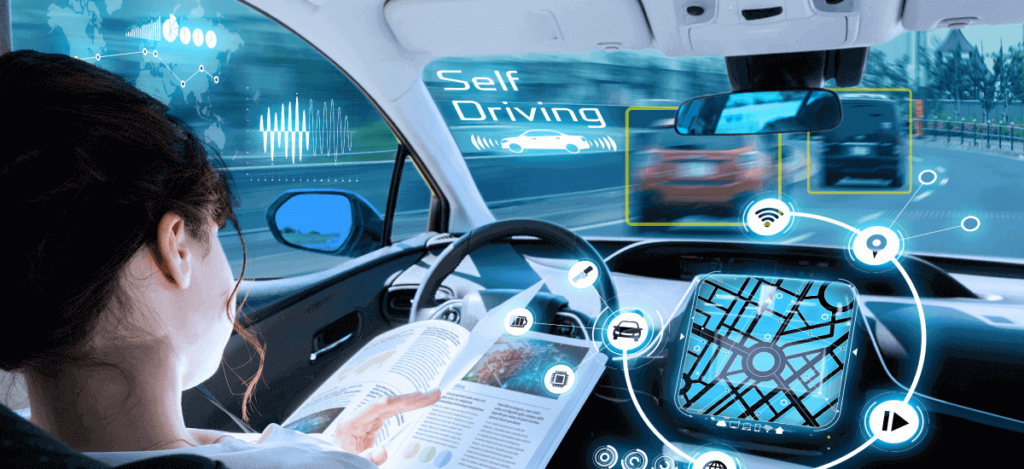
Imagine getting into your car, entering a destination, and letting the vehicle handle the road while you sit back and relax.Additionally, Self-Driving Technology points to the future of autonomous cars.Moreover, there is no constant steering.There is no searching for the right lane, and there is potentially less stress during a long journey.That is the basic idea behind self-driving technology.Autonomous vehicles are no longer just something we see in science-fiction movies.Additionally, Self-Driving cars use cameras, radar, sensors, GPS, software, and driver-assistance systems.These tools help them understand their surroundings and perform tasks like steering, braking, parking, and maintaining a safe distance.However, there is an important difference between a car that can assist a driver and a truly autonomous vehicle that can perform the entire driving task without human control under defined conditions.The technology is developing quickly, but it also raises practical questions about safety, cost, regulations, responsibility, infrastructure, and how people will interact with vehicles in the future.Let’s take a closer look.
What Is Self-Driving Technology?
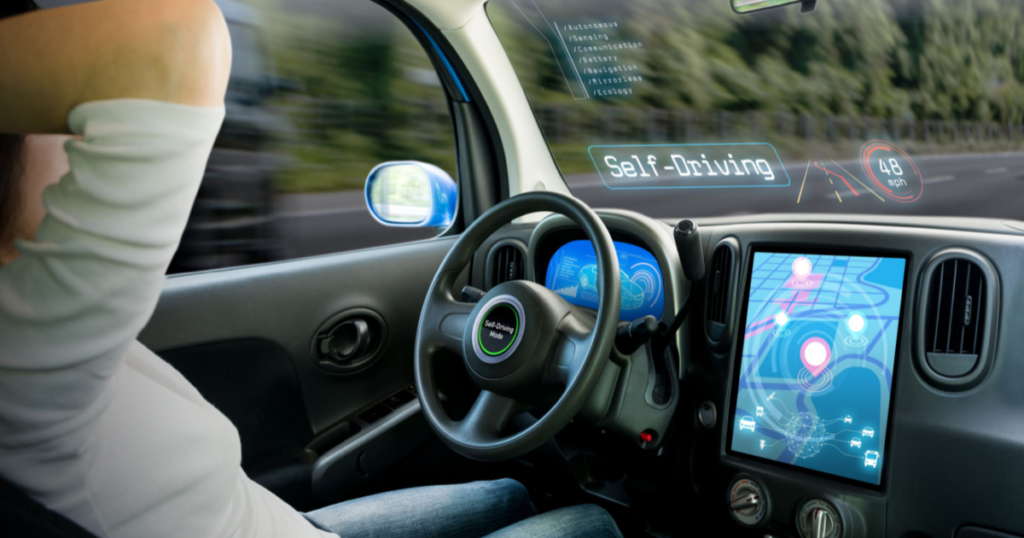
Self-driving technology refers to the combination of hardware and software that allows a vehicle to perceive its surroundings, understand road conditions, make driving decisions, and control some or all vehicle functions.
A modern autonomous driving system may use several technologies together:
- Cameras
- Radar
- LiDAR
- GPS and mapping
- Ultrasonic sensors
- Artificial intelligence
- Machine learning
- Onboard computing
- Vehicle control systems
Think of the system as giving a car a set of digital senses and decision-making capabilities.
A camera can identify road markings or traffic lights. Radar can help detect objects and measure distance. Maps can provide information about roads and routes. Software then combines these inputs to determine what the vehicle should do.
The difficult part is that roads are rarely perfectly predictable.
A pedestrian might suddenly cross the street. A cyclist may move into a vehicle’s path. Construction workers may redirect traffic. Heavy rain can reduce visibility.
A reliable autonomous system therefore needs to deal with real-world uncertainty, not just follow a fixed route.
How Do Autonomous Cars Work?
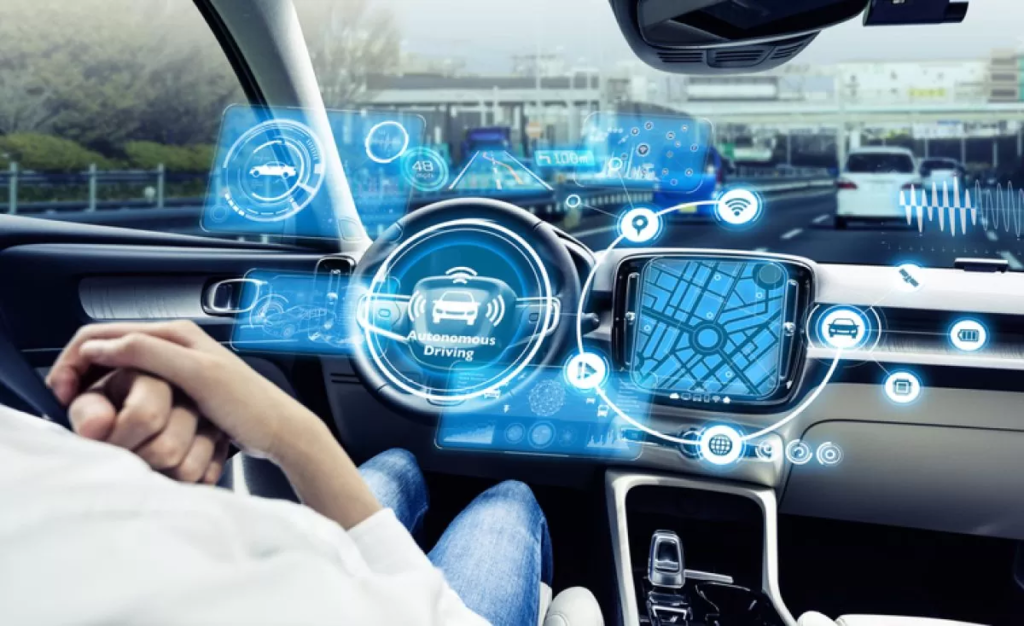
A self-driving vehicle generally follows a cycle of sensing, understanding, planning, and controlling.
1. Sensing the Environment
Sensors continuously collect information around the vehicle.
For example:
- Cameras can recognize visual information.
- Radar can detect objects and estimate distance.
- LiDAR can create detailed representations of surroundings.
- GPS can help determine location.
- Other vehicle systems can provide information about speed and movement.
2. Understanding What Is Happening
The vehicle’s software processes the sensor information to identify things such as:
- Cars
- Trucks
- Pedestrians
- Cyclists
- Traffic lights
- Road signs
- Lane markings
- Obstacles
This stage is sometimes described as perception.
3. Planning the Next Move
Once the system understands its surroundings, it needs to decide what to do next.
Should the vehicle:
- Continue straight?
- Slow down?
- Change lanes?
- Stop?
- Turn?
- Maintain its position?
The system evaluates available options and selects an appropriate driving action based on its programming and operating conditions.
4. Controlling the Vehicle
Finally, the system sends instructions to the vehicle’s controls.
This can involve:
- Steering
- Acceleration
- Braking
- Gear selection
The cycle happens continuously while the system is operating.
Understanding Autonomous Driving Levels
Not every vehicle described as “self-driving” can drive itself everywhere.
The widely used SAE driving automation levels range from Level 0 to Level 5.
| Level | Description | Human Role |
|---|---|---|
| Level 0 | No driving automation | Driver handles driving |
| Level 1 | Driver assistance | Driver remains responsible |
| Level 2 | Partial driving automation | Driver must supervise |
| Level 3 | Conditional automation | System drives under specific conditions |
| Level 4 | High automation | System can drive within defined conditions |
| Level 5 | Full automation | System is designed to drive everywhere within its intended scope |
This distinction is extremely important.
A vehicle with lane-centering and adaptive cruise control may provide sophisticated assistance, but that does not mean the driver can safely stop paying attention.
Driver assistance is not automatically the same thing as full autonomy.
What Technologies Make Self-Driving Cars Possible?
Autonomous vehicles combine several areas of technology.
Artificial Intelligence
AI helps vehicles interpret complex information and recognize objects and situations.
For example, an AI system may need to distinguish between a parked vehicle and a moving vehicle, or identify a pedestrian near a crosswalk.
Computer Vision
Computer vision allows computers to interpret images and video captured by cameras.
It can help identify:
- Lane markings
- Vehicles
- People
- Signs
- Traffic lights
- Road boundaries
Radar
Radar systems use radio waves to detect objects and estimate distance and movement.
Radar can be particularly useful when visibility is reduced.
LiDAR
LiDAR uses laser pulses to measure distances and build detailed information about the environment around a vehicle.
It can be valuable for creating a three-dimensional understanding of nearby objects.
High-Definition Maps
Maps can provide detailed information about roads, intersections, lanes, and other geographic features.
However, autonomous systems cannot rely only on maps because real-world conditions can change.
Construction, temporary road closures, weather, and unexpected obstacles can all create situations that require the vehicle to interpret its surroundings in real time.
Self-Driving Technology vs. Driver Assistance
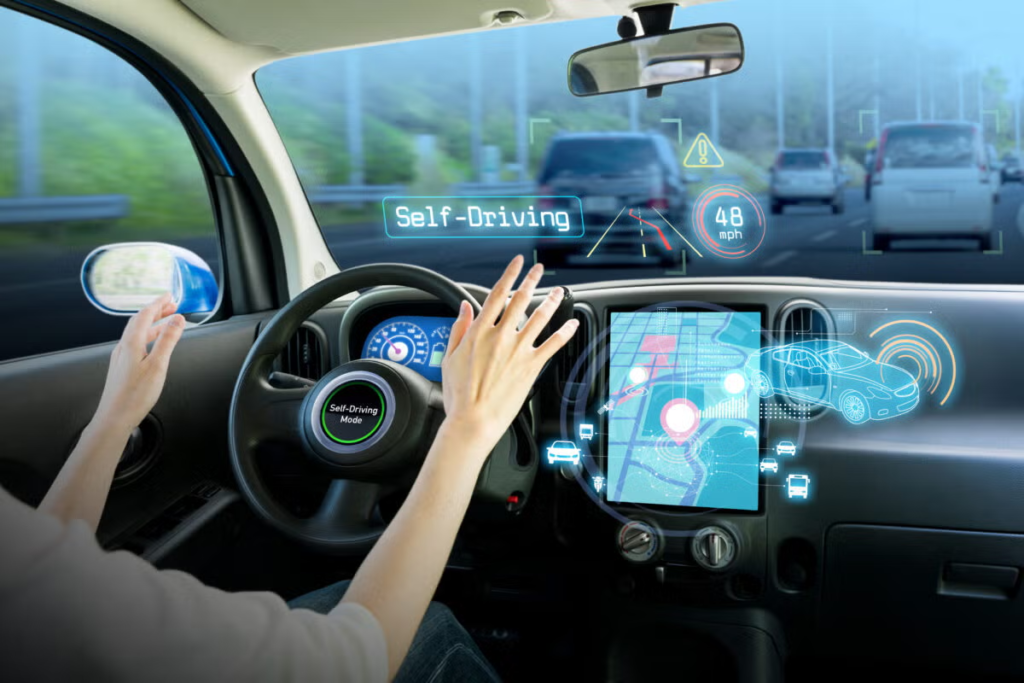
This distinction can be confusing for everyday drivers.
| Feature | Driver Assistance | Autonomous Driving |
|---|---|---|
| Steering assistance | Common | Possible |
| Automatic braking | Common | Possible |
| Adaptive cruise control | Common | Possible |
| Lane keeping | Common | Possible |
| Driver supervision | Generally required | Depends on automation level |
| Vehicle handles complete driving task | No | At certain automation levels |
| Operating conditions | Usually broader assistance role | May be limited to defined conditions |
The important question is not simply “Does this car drive itself?”
Instead, ask:
“Under what conditions can the system operate without human control?”
That question gives a much clearer picture of a vehicle’s capabilities.
Potential Benefits of Autonomous Vehicles
Autonomous driving technology could change transportation in several ways.
Improved Road Safety
Human mistakes are an important part of road safety discussions. Autonomous systems are designed to continuously monitor their surroundings and respond according to programmed behavior.
That does not mean autonomous vehicles are automatically risk-free. Technology can fail, sensors can encounter difficult conditions, and unexpected situations can occur.
Still, reducing certain types of human error is one of the major reasons researchers are interested in automated driving.
More Accessible Transportation
Autonomous vehicles could eventually provide new transportation options for people who have difficulty driving themselves.
This could be particularly meaningful for some older adults and people with certain mobility limitations, depending on how the technology and regulations develop.
Less Driving Stress
Long commutes can be tiring.
If autonomous systems eventually become capable of handling more driving situations safely, people could potentially use travel time for other activities instead of focusing continuously on the road.
Better Transportation Efficiency
Connected and automated vehicles could potentially coordinate movement more efficiently, reduce unnecessary stops, and improve traffic flow in certain environments.
The real-world impact, however, will depend on how autonomous vehicles interact with human-driven vehicles and transportation infrastructure.
Challenges Facing Self-Driving Cars
The future of autonomous vehicles is exciting, but there are still major challenges.
Unpredictable Road Conditions
Real roads are messy.
Drivers encounter:
- Heavy rain
- Fog
- Poor road markings
- Potholes
- Construction zones
- Animals
- Aggressive drivers
- Unexpected pedestrians
- Temporary signs
Teaching a machine to respond appropriately to every possible situation is extremely difficult.
Safety
Safety remains one of the biggest concerns surrounding autonomous driving.
A system must not only work in normal situations but also respond appropriately when something unusual happens.
Developers therefore need extensive testing, validation, monitoring, and safety processes.
Legal and Regulatory Questions
Autonomous vehicles raise difficult questions about responsibility.
For example:
If an autonomous vehicle causes a crash, who is responsible?
The answer may involve the driver, vehicle manufacturer, software developer, operator, or another party depending on the circumstances and applicable laws.
Regulations will continue to evolve as automated driving technology develops.
Cybersecurity
A connected vehicle is also a potential target for cyberattacks.
Autonomous cars depend heavily on software, sensors, communication systems, and electronic controls.
Protecting these systems is therefore an important part of vehicle safety.
Public Trust
Even technically capable systems need public acceptance.
People may hesitate to trust a vehicle with important decisions about their safety.
Building confidence will require transparency, testing, clear communication, and evidence that systems perform reliably within their intended operating conditions.
Autonomous Vehicles and Artificial Intelligence
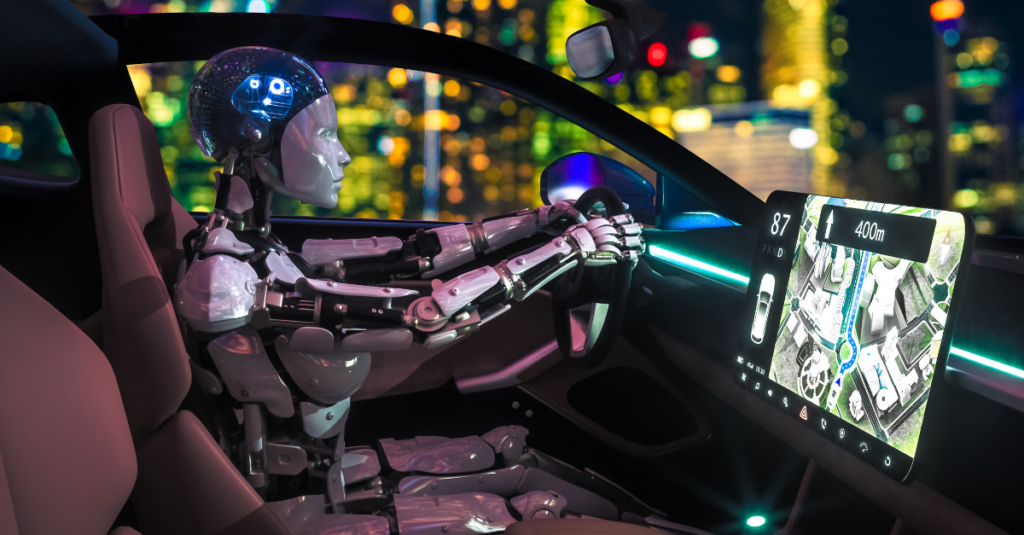
AI is at the heart of many modern autonomous driving systems.
A vehicle needs to process enormous amounts of information and make decisions in a constantly changing environment.
For example, imagine a car approaching an intersection.
It may need to recognize:
- A traffic signal
- A pedestrian waiting nearby
- A cyclist approaching from the side
- A vehicle coming from another direction
- Lane markings
- The intended route
The system then needs to determine what action is appropriate.
This is where AI, computer vision, sensor processing, and decision-making software come together.
Will Self-Driving Cars Replace Human Drivers?
Probably not in one simple step.
Transportation is more likely to change gradually.
Different levels of automation may coexist for many years. Some people will continue driving traditional vehicles, while others may use vehicles with advanced driver assistance or automated driving capabilities.
The transition will depend on:
- Technology
- Cost
- Regulation
- Infrastructure
- Consumer acceptance
- Safety performance
- Availability of suitable roads and operating environments
Rather than imagining a sudden world where every car becomes autonomous, it is more realistic to think of automation increasing gradually across different types of vehicles and driving environments.
How Autonomous Vehicles Could Change Cities
Self-driving technology could eventually influence more than individual cars.
Consider autonomous taxis, delivery vehicles, buses, and logistics fleets.
A city could potentially use automated vehicles to:
- Improve transportation availability
- Support last-mile delivery
- Connect neighborhoods with transit stations
- Operate certain shuttle services
- Improve logistics efficiency
However, autonomous vehicles could also create new challenges.
If automated cars make travel easier and cheaper, people might travel more often. That could increase congestion rather than reduce it.
So, the impact on cities will depend not only on the technology but also on transportation policy, urban planning, public transit, and how people choose to travel.
Autonomous Vehicles and the Future of Work
Self-driving technology could affect several industries.
Potentially affected areas include:
- Trucking
- Taxi services
- Delivery
- Logistics
- Warehousing
- Public transportation
- Fleet management
Some jobs may change rather than disappear completely.
For example, a transportation worker might increasingly focus on supervising fleets, handling customers, managing logistics, or responding to unusual situations.
The exact employment impact remains uncertain and will depend on how quickly automation develops and where it is adopted.
Are Self-Driving Cars Environmentally Friendly?
Autonomous technology itself does not automatically make a vehicle environmentally friendly.
An autonomous petrol-powered vehicle still consumes fuel.
Environmental benefits may become more significant when autonomous driving is combined with electric vehicles, efficient routing, shared transportation, and better fleet management.
For example, an autonomous electric taxi fleet could potentially operate differently from individually owned petrol vehicles.
But the overall environmental result depends on factors such as:
- Vehicle energy source
- Electricity generation
- Vehicle utilization
- Passenger occupancy
- Travel demand
- Manufacturing impacts
- Fleet efficiency
So, autonomy and sustainability should be considered as related but separate issues.
What Will the Future of Autonomous Cars Look Like?
The future is likely to be a mix of technologies rather than one universal type of vehicle.
We may see continued development in:
| Future Area | Possible Development |
|---|---|
| Robotaxis | Automated ride services in defined areas |
| Autonomous delivery | Driverless delivery in selected environments |
| Smart highways | Better communication between vehicles and infrastructure |
| Electric autonomous fleets | Automated EVs for transport and logistics |
| Advanced sensors | Better perception and environmental awareness |
| AI systems | More capable driving decision systems |
| Connected vehicles | Greater communication between vehicles and networks |
| Automated parking | Increasingly hands-off parking experiences |
Some developments may arrive sooner in controlled environments than on ordinary public roads.
How Drivers Can Prepare for Autonomous Vehicles
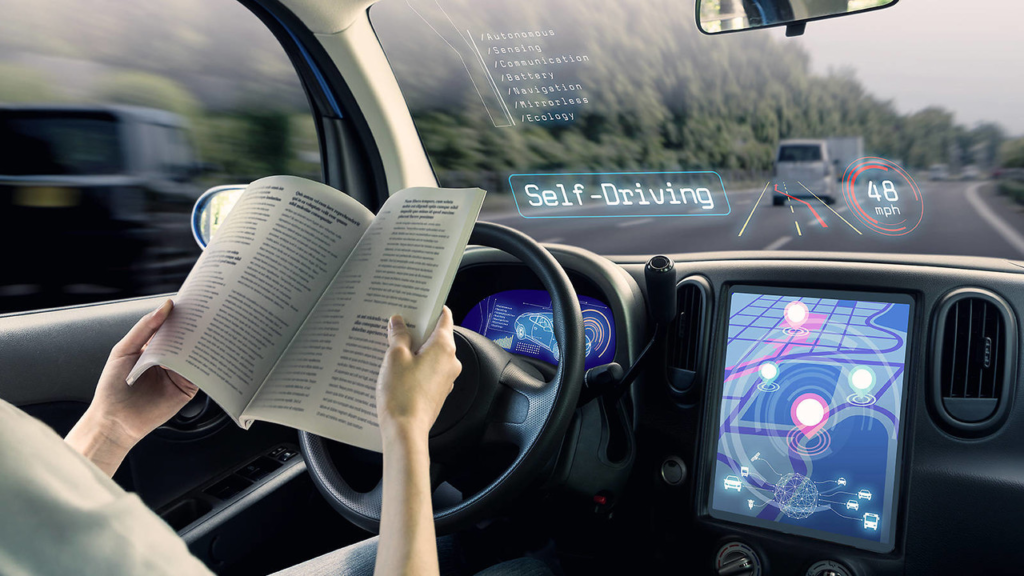
You don’t need to become a robotics expert to understand the technology.
A good starting point is learning the difference between:
- Driver assistance
- Partial automation
- Conditional automation
- High automation
- Full automation
When buying a vehicle with advanced driving features, read the manufacturer’s instructions carefully.
Don’t assume that marketing phrases such as “self-driving” mean the vehicle can operate without supervision in every situation.
Always understand:
- What the system can do
- Where it can operate
- When it should be used
- When the driver must intervene
- What limitations the manufacturer identifies
That simple habit can prevent unrealistic expectations.
FAQ’S
1. What is self-driving technology?
Self-driving technology uses cameras, sensors, software, artificial intelligence, radar, mapping, and other systems to help a vehicle understand its surroundings and perform driving tasks.
2. How do self-driving cars work?
Self-driving cars collect information from their surroundings using sensors and cameras. Software processes this information, identifies vehicles, pedestrians, road markings, signs, and other objects, and then helps the vehicle decide how to steer, accelerate, or brake.
3. Are self-driving cars fully autonomous?
Not all vehicles marketed with advanced driving features are fully autonomous. Automation ranges from basic driver assistance to systems capable of performing the complete driving task under specific conditions. Drivers should always understand the capabilities and limitations of their particular vehicle.
4. What are the different levels of autonomous driving?
The commonly used SAE scale ranges from Level 0 to Level 5. Level 0 involves no driving automation, while Level 1 and Level 2 provide driver assistance. Higher levels provide increasing amounts of automated driving, with Level 5 representing full driving automation within the system’s intended scope
5. What technologies are used in autonomous vehicles?
Autonomous vehicles can use cameras, radar, LiDAR, GPS, high-definition maps, artificial intelligence, machine learning, and onboard computing. These technologies work together to help the vehicle understand and respond to its surroundings.